
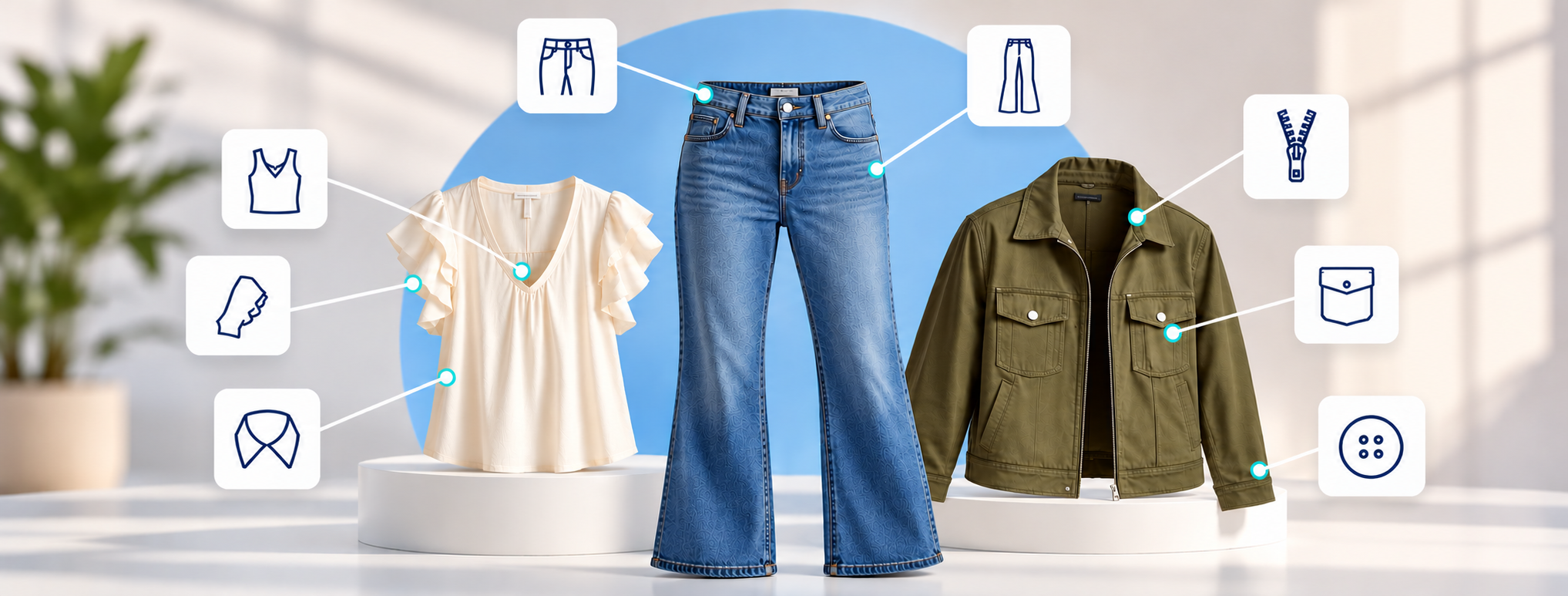
A shopper searching for jeans may want more than a particular size and color. They might be looking specifically for high-rise bootcut jeans, a relaxed fit, or a certain leg shape. If those details are missing from your product feed, you're giving Google less information to work with when matching products to relevant searches.
Google Merchant Center requires standard apparel attributes such as color, size, age_group, and gender for applicable products and markets. But these attributes only tell part of the story.
Apparel Attributes Worth Including
Depending on the product category, additional characteristics can help Google better understand what you're selling:
- Jeans and pants: Rise, leg shape, and fit (high-rise, tapered, bootcut, relaxed)
- Shirts and tops: Neckline, collar type, and sleeve length (V-neck, spread collar, sleeveless)
- Jackets and outerwear: Closure type, pockets, and fit (zipper, button-front, oversized)
Many retailers already have this information somewhere in their product catalog. The opportunity is to make sure it reaches Google in the right feed attributes.
Where Should These Details Go?
Google provides several ways to communicate additional product characteristics. We recommend prioritizing the information most useful to shoppers and avoiding unnecessary duplication.
- Product titles
[title]: Include defining characteristics that shoppers are likely to search for. "High-Rise Bootcut Jeans" is more descriptive than "Women's Jeans" without making the title unnecessarily long. - Descriptions
[description]: Add relevant details that need more explanation, such as "Long-sleeve shirt with a spread collar, button-front closure, and button cuffs." Put the most important information first. - Product details
[product_detail]: Submit additional specifications as structured values, such as "Garment Fit: Relaxed" or "Closure: Button." Prioritize details that aren't already adequately represented elsewhere in the feed.
The best approach depends on the garment. Rise and leg shape may be critical for jeans, while neckline and sleeve length are more relevant for tops.
Make Better Use of Your Existing Product Data
Start by reviewing one apparel category. Identify useful characteristics already available in your catalog, determine which are missing from your feed, and establish consistent rules for including them.
Some details may exist only within product descriptions rather than dedicated fields. AI-powered attribute extraction can help turn that unstructured information into usable feed data. Just make sure the extracted values are accurate rather than filling gaps with assumptions.
More complete product data gives Google additional context for traditional Shopping listings and emerging AI-driven shopping experiences.