
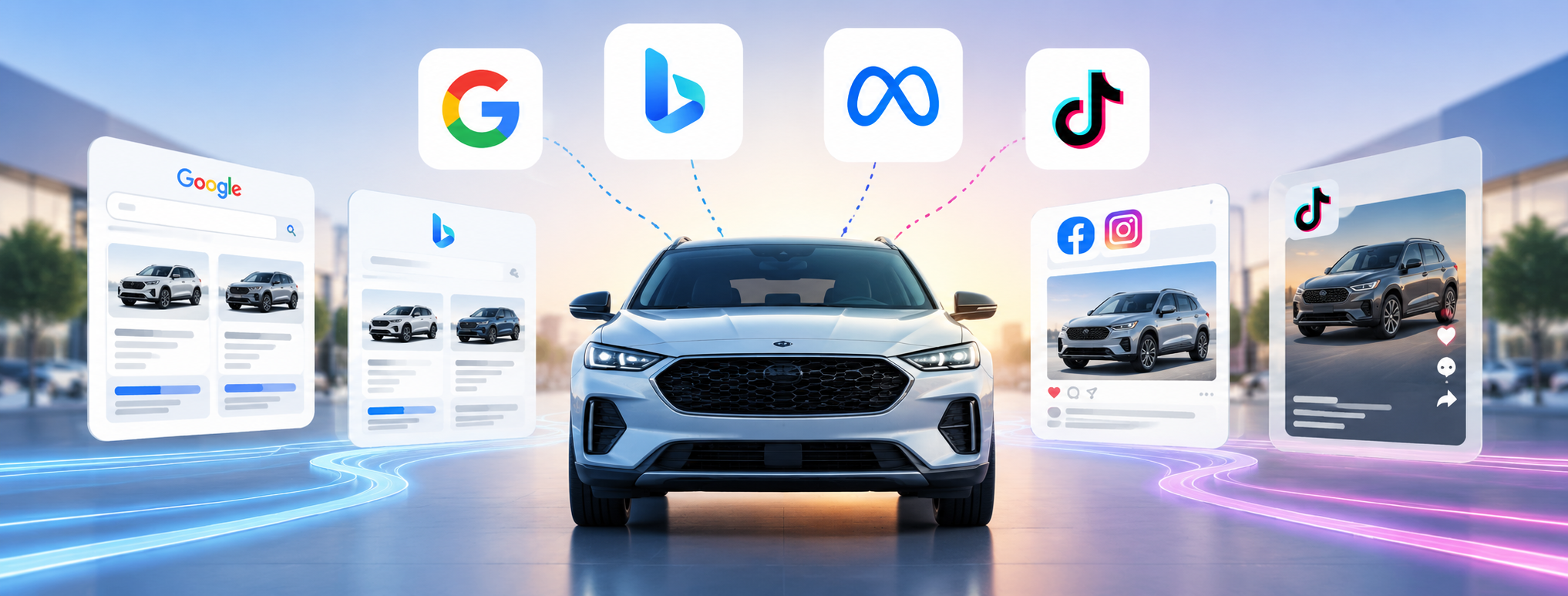
Google Vehicle Ads are a familiar way to put vehicle inventory in front of active shoppers, but Google isn’t the only option. Microsoft, Meta and TikTok all offer automotive inventory ad formats that use vehicle feed data to dynamically promote available inventory.
For dealerships looking to expand their reach, each platform fills a different role. Microsoft can capture additional high-intent search demand, while Meta and TikTok can reach, influence and re-engage shoppers in social environments.
Bing/Microsoft Advantages
Similar to Google Vehicle Ads, Microsoft Automotive Ads reach shoppers who are already researching and comparing vehicles. One automotive inventory feed can support ads across Microsoft Search and native placements on the Microsoft Audience Network. The same feed can also power dynamic remarketing through Audience campaigns.
Bing reaches a different audience than Google, making Microsoft a good source of incremental search volume without requiring a completely different strategy. Think of it as a complement to Google Vehicle Ads rather than a replacement.
Bing/Microsoft Considerations
Microsoft Automotive Ads require a Search campaign structure, with a Responsive Search Ad serving as a placeholder for the dynamic inventory ads.
Vehicle support is another consideration. Google Vehicle Ads recently expanded beyond cars and trucks to include ATVs, RVs, UTVs and non-motorized trailers. Microsoft’s support for these additional vehicle types is less clear.
Microsoft also offers less creative flexibility than Meta or TikTok. Like Google Vehicle Ads, its strength is automated, intent-driven advertising rather than visual storytelling.
Meta and TikTok Advantages
Meta and TikTok take automotive inventory beyond active search. Both platforms can retarget shoppers who have viewed vehicles or interacted with a dealership, while behavioral and interest signals can help identify potential shoppers who aren’t actively searching yet.
- Meta: Vehicle inventory can appear across Facebook and Instagram, giving dealerships access to audiences throughout Meta’s social environment.
- TikTok: Smart+ uses automotive intent and vehicle matching to help reach audiences likely to convert. TikTok can also provide access to younger audiences than Meta.
Both platforms offer more creative flexibility than traditional search ads. Videos, carousels, Reels, Stories and other social formats can introduce inventory earlier in the buying process and help generate demand that may eventually lead to a vehicle search.
Meta and TikTok also support a wider range of inventory. Beyond cars and trucks, both support motorcycles, commercial vehicles, boats, powersports vehicles, RVs, campers and trailers.
Meta and TikTok Considerations
The data feed does much of the work to dynamically populate inventory information, but creative still matters. Meta and TikTok are more visually driven than Google or Microsoft, so stronger creative elements can make a bigger difference.
Lead quality also deserves attention. Social platforms can generate relatively inexpensive leads, but dealerships should evaluate which leads are translating into qualified sales opportunities rather than judging performance on lead volume or cost alone.
One Feed, More Opportunities
There’s no need to treat these platforms as either/or choices. Google Vehicle Ads and Microsoft Automotive Ads can capture high-intent search demand, while Meta and TikTok can use similar underlying inventory data to discover, influence and re-engage potential shoppers.
For dealerships already maintaining a strong automotive inventory feed, expanding to additional channels can put that same data to work across more of the vehicle-buying journey.
Sources
- Bing/Microsoft Automotive Ads
- Meta Automotive Inventory Ads
- TikTok Automotive Ads