

TikTok has officially entered the automotive advertising space alongside Google Vehicle Listing Ads (VLA) and Meta Automotive Inventory Ads (AIA) as of July 2025. This is a new way for dealers, marketplaces, and OEMs to promote VIN-level inventory, models, trims, and offers to shoppers who are actively showing in-market intent. Much like other automotive ad platforms, TikTok uses signals like user behavior and preferences to match the right vehicle listings to the right audience at the right time, but it does so in a uniquely TikTok-native way that blends discovery, entertainment, and shopping style engagement.
At the core of TikTok Automotive Ads is a vehicle catalog/feed, which powers dynamic ad generation tied to individual vehicles or models. TikTok pulls images, pricing, and vehicle details directly from your catalog to automatically build ad formats such as dynamic carousels or Video + Product Card ads. This means instead of manually building hundreds (or thousands) of ads for your inventory, your feed becomes the creative engine - making it easier to scale campaigns across large inventories while staying relevant to what shoppers actually want.
To participate, advertisers will need to meet TikTok’s feed requirements, which are straightforward for anyone managing Google Vehicle Listing Ads or Meta Automotive Inventory Ads. For best performance, TikTok recommends matching your feed IDs to TikTok Pixel events using content_id, enabling stronger retargeting and optimization. There's a decent amount of information available on TikTok's help center on this ad format and how to set up the campaigns, etc.
How Is This Different From Google VLA and Meta AIA?
Where TikTok may differ from Google and Meta is in how the inventory experience is delivered and how users engage with it. Google VLA tends to capture shoppers with high-intent search behavior (“best SUV under $30k”), while Meta AIAs often shine in social browsing and retargeting across Facebook and Instagram. TikTok Automotive Ads blend intent and discovery, using TikTok style creative formats like Video + Product Card to keep the experience native to the platform while still driving users to highly specific VIN or model destinations. TikTok also introduces a more immersive in-app shopping layer, including the ability for users to browse inventory through a TikTok Vehicle Inventory Page, which adds another surface for exposure beyond the ad itself.
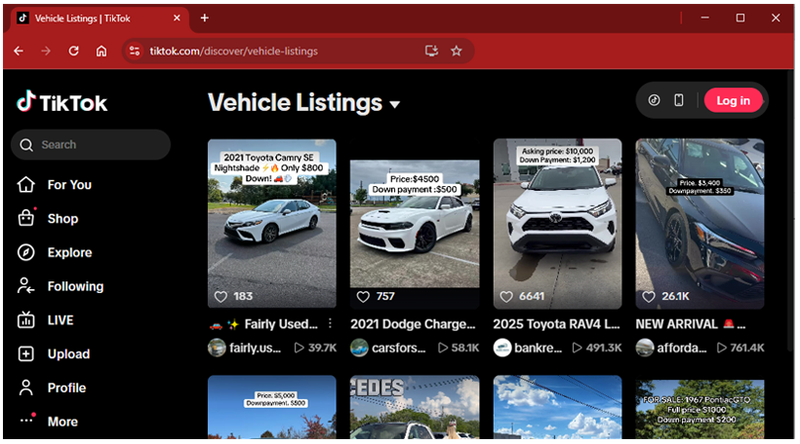
The biggest upside for automotive advertisers is scale with personalization: TikTok Automotive Ads can recommend VINs or models dynamically, reduce creative production by showcasing multiple vehicles in a single unit, and drive shoppers to more relevant landing experiences using multi-link CTAs, including filtered inventory or sort pages. For dealers and marketplaces already investing in feed-driven marketing on Google and Meta, TikTok represents a new opportunity to extend that same inventory strategy into one of the fastest growing discovery platforms while keeping your campaigns automated, refreshed and performance ready.