
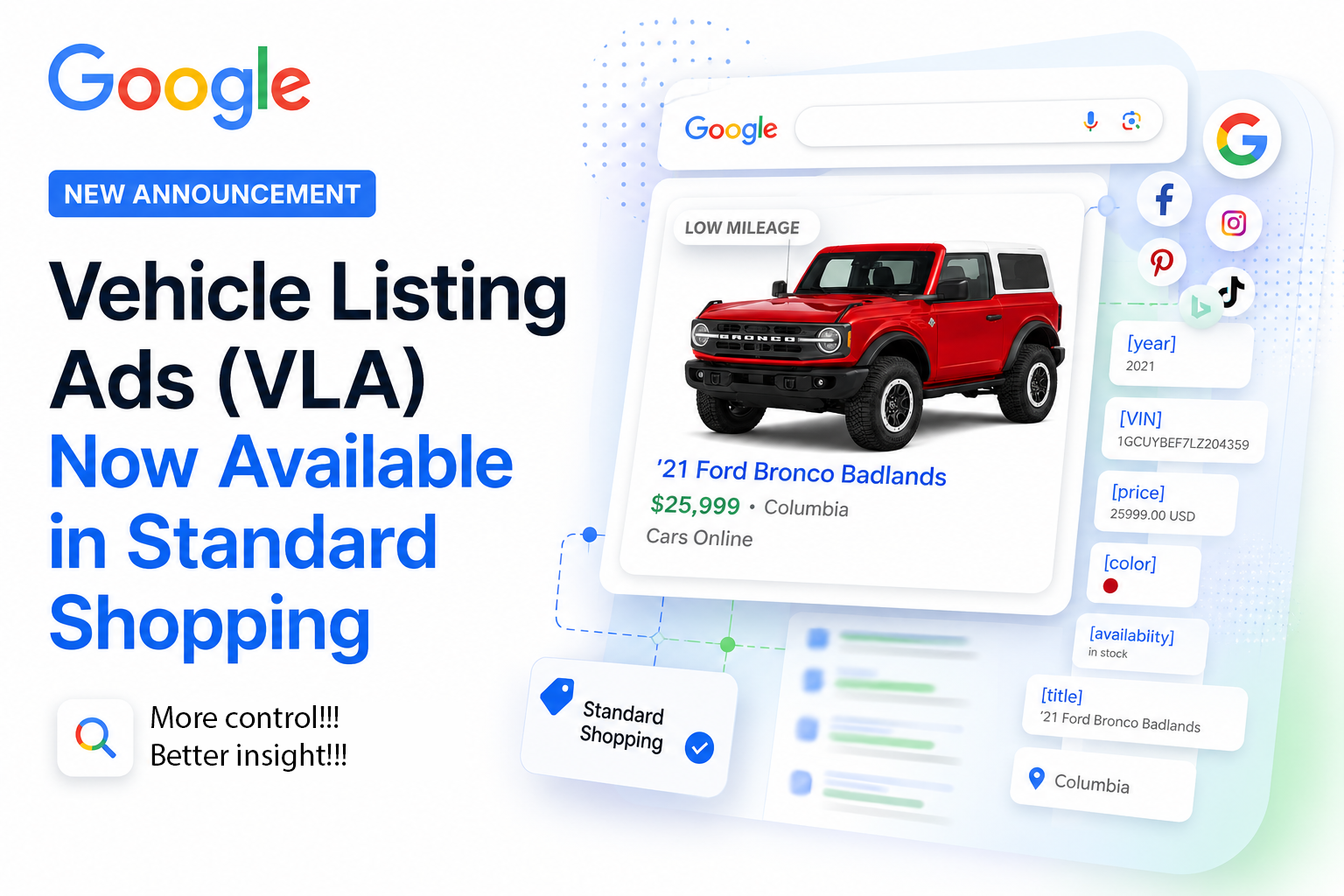
Vehicle Listing Ads (VLA) can now run in Standard Shopping campaigns on Google, offering advertisers greater control and flexibility. Until recently, VLAs were primarily tied to Performance Max (PMax) campaigns which is notorious for minimal visibility and control. Running a Standard Shopping VLA campaign will give digital marketplaces and dealerships much more control over how their inventory is promoted and where the budget is spent.
This doesn't mean PMax VLA efforts should disappear completely from the mix. Most advertisers could actually benefit from a hybrid type strategy as PMax still covers a massive amount of Google real estate that Standard Shopping simply can't reach. The key is to manage the campaigns to prevent cannibalization.
What Standard Shopping Can Do That PMax Can't
The biggest advantage of Standard Shopping is the control. With PMax, Google relies heavily on its own automation and internal signals to decide which vehicles to show, who to show them to, where ads appear and how budgets gets allocated.
Sometimes those signals align with internal business goals and sometimes they don't. Standard Shopping gives advertisers the ability to be much more intentional with inventory strategy. For example, you can prioritize:
- High-margin inventory
- Slow-moving vehicles that need more visibility
- Seasonal inventory like convertibles or Jeeps during warmer months
- EV inventory in markets where demand is strongest
- Vehicles tied to manufacturer incentives or special pricing
- Inventory by rooftop or region
Clean Feed Data Delivers VLA Segmentation & Control
This level of segmentation is where feed strategy becomes incredibly important. To fully leverage Standard Shopping, advertisers need clean inventory data, accurate vehicle attributes, strong custom label strategies and thoughtful feed segmentation. The reach for Standard Shopping will likely be smaller compared compared to PMax, but the traffic may also be more qualified since Standard Shopping leans more heavily into high-intent Shopping placements (like the SERP) instead of broader display inventory.
Areas Where PMax Still Wins
PMax still offers a far more automated, hands-off approach showing ads on many channels like:
- Search
- Shopping
- YouTube
- Gmail
- Discover
- Display
- Maps
That broader reach helps advertisers capture demand across multiple touchpoints but many hands-on advertisers still struggle with some of the tradeoffs that come with PMax, including:
- Limited reporting transparency
- Less control over inventory prioritization
- Limited ability to make strategic optimizations
- Unclear budget allocation across channels
One common frustration is that spend can become over-indexed toward remarketing or display heavy placements, potentially limiting visibility in higher-intent Shopping and Search environments.
Why a Hybrid Strategy Makes Sense
For many dealers and agencies, the best approach will likely be using both campaigns types together. Using PMax for the broad reach and automation and Standard Shopping for tighter inventory control and segmentation. Historically, Google gave PMax priority when the same inventory existed in both campaign types but now they claim relevance and ad rank matter more. PMax will, however, absorb more traffic because of its broader reach and signal access.
Running a hybrid approach comes down to a smart and thoughtful campaign segmentation strategy. Using PMax for a broader inventory pool while carving out strategic subsets for Standard Shopping is a winning combination. Here's an example of how that break out could look:
Standard Shopping |
PMax |
| High-margin inventory | Broad inventory coverage |
| Aging inventory | Prospecting and new demand |
| Used vehicles | New vehicles |
| Geographic focus campaigns | Nationwide scale |
| EV-only campaigns | General inventory |
| Specific rooftops | All rooftops |
With the above setup, some overlap will still exist - and that's okay. PMax generally performs best with larger inventory pools and more data signal, while Standard Shopping tends to excel when inventory selection is more intentational and manually optimized.
The Bigger Takeaway
This update is a major win for automotive advertisers because it brings flexibility and strategy back into Vehicle Listing Ads. But it also raises the importance of the feed itself. The advertisers who will benefit the most are the ones with:
- Clean feeds
- Strong vehicle data
- Smart custom label strategies
- Intentional inventory segmentation
As Google gives advertisers more campaign flexibility, feed management becomes even more valuable.